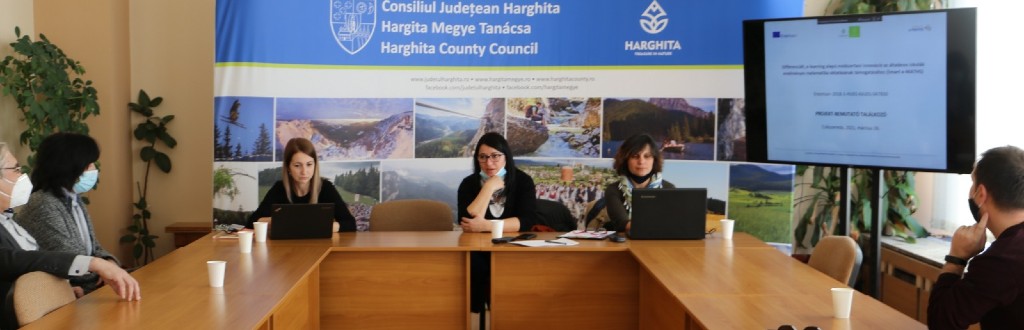
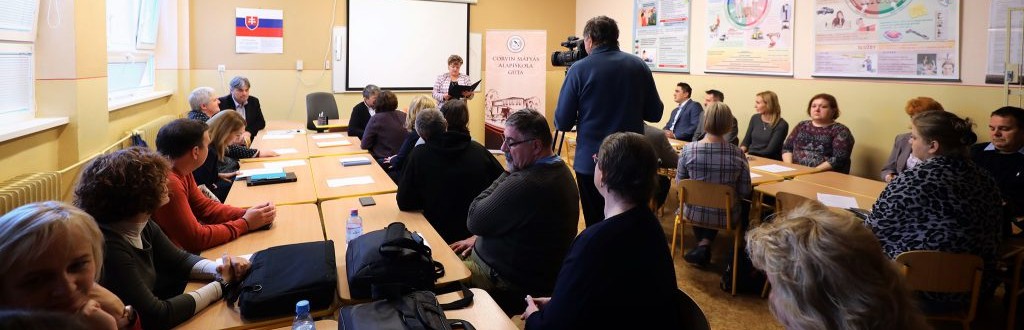
The development of innovative mathematical methodologies was the topic of the two-day Erasmus+ project meeting hosted by Mátyás Corvin Primary School in Gúta. The event was attended by representatives of three countries – Hungary, Slovakia and Romania.
In his opening speech, Erzsébet Csütörtöki, the headmistress of the school, welcomed Árpád Horváth, the mayor of Gúta, István Szőköl, the president of the Parents’ Association “Hungarian Parents in Slovakia” operating in cooperation with the Mátyás Corvin Primary School in Gúta and the director of the Methodological Pedagogical Center from Komárom, Endre Borsos, president of Interregio Forum Association from Budapest, Erzsébet Kiss, the director of the New Chance Association, and Enikő Bálint Miklóssy, the director of the Association for Hargita County. In addition to the experts of the project meeting, she greeted the leaders and mathematics teachers of the other educational institutions in Gúta.
“Our school’s teachers have always been open to new information and opportunities to provide to the students the best possible knowledge available, thus keeping up with the times. Now we are also among those selected who can contribute to the development of innovative methodologies through their professional work, ” – she said.
Following this, project manager Endre Borsos provided more information about the concept of the program. He said the goal of the SMART e-Maths project is to develop a differentiated, e-learning-based methodological innovation that contributes to the effectiveness of mathematics education. As a result, students will be able to work and study on tablets in the framework of classroom-education.
A good educational software must have an appropriate, user-friendly framework with content that is interesting and tailored to the needs of the target group, i.e. the content requirements of the application are: development of tasks and short, concise, informative learning materials meeting the challenges of the 21st century that take into account students’ age and level of preparation. With these considerations in mind, they are working to ensure that the institutions and professionals involved can use the project’s training software with great satisfaction.
Over the weekend, teachers and education experts actively worked on the development of the curriculum, measurements, the methodological guide and demo tasks. Thus, the testing of the curriculum developed during the project will start in March 2020 in schools in the Slovakia, Hungary and Transylvania.