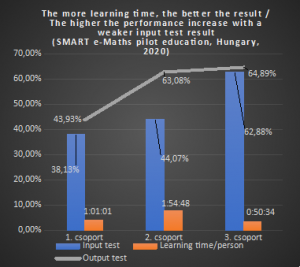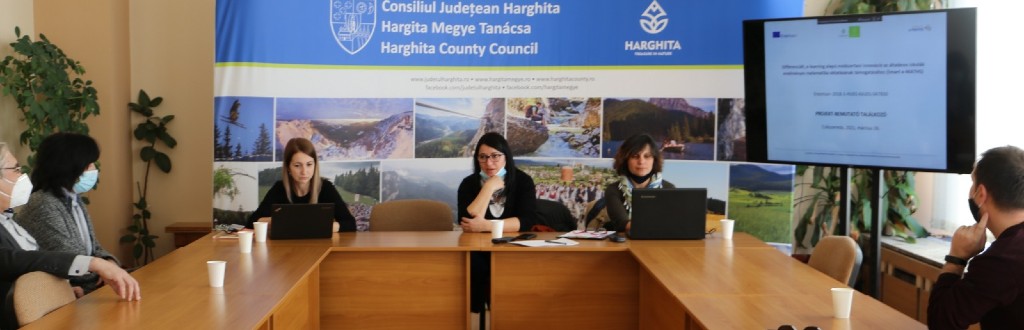
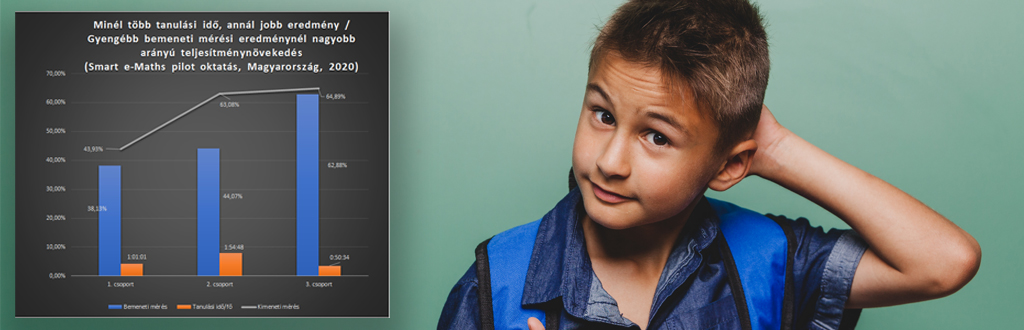
The SMART e-Maths pilot education will be completed in November-December 2020 in schools of the three participating countries, where the developed mathematics curriculum has been tested in several student groups (and control groups).
Unfortunately, the COVID pandemic slightly disrupted the project implementation process in all three countries, as teachers often had to help children work remotely in a way that was almost totally new to them. Groups with different abilities, backgrounds and motivations were formed, but perhaps we managed to get results from an even wider spectrum.
Some elements of the feedback from teachers:
- Due to the individual pace, the tasks were sufficiently difficult for everyone. It can be clearly traced that children with good abilities reached competition-level tasks, while weaker ones progressed more slowly.
- The majority of the students liked the tasks. We know from feedback that there were mathematical relationships that were understood during the process of the education performed in the project. This was helped by the fact that several tasks were prepared for one topic, so the students had the opportunity to practice extensively.
- The function of the games was understood very quickly by the students. The supporting tasks and explanations of the system help the development of the independent learning ability and self-check.
- Due to the individual pace of the learning process, it did not become boring for the students with very good abilities either.
- During the process, the teacher received feedback on the time spent on the tasks, the level reached, the point where students got stuck. Most of the teachers who have tested the tasks recommend the developed method for using in other topics, possibly for another subject(s) as well.